Textile Enzymes Market: What Mills, Laundries and Distributors Buy, Step by Step
Which enzyme does which job in desizing, scouring, bleach cleanup, biopolishing, denim washing and softening, what to compare before switching, and what to send for a bulk quote.
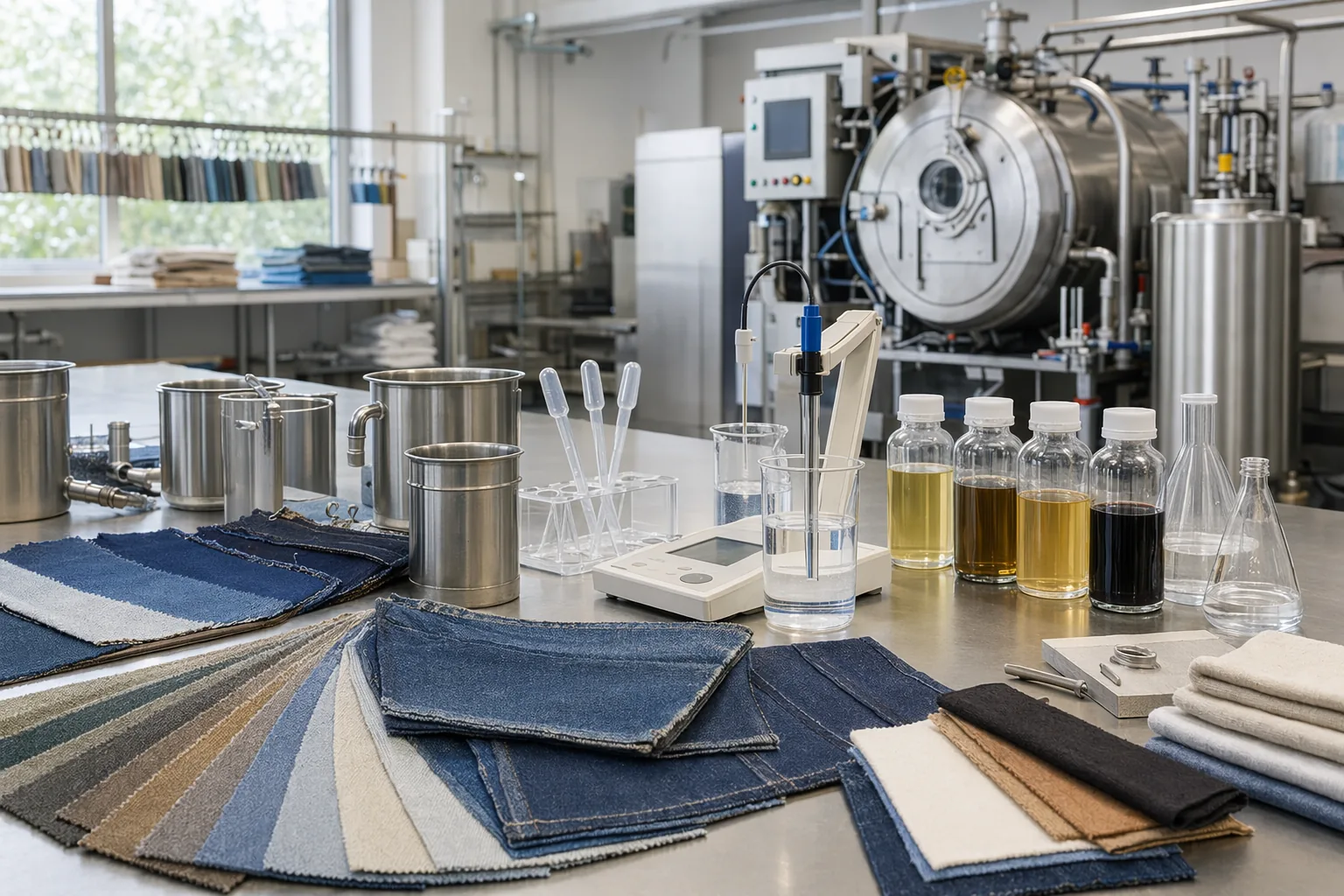
Textile mills, garment laundries and the textile-chemical distributors who supply them buy enzymes to replace one harsh step at a time, not to change the whole line at once. This page maps each wet-processing step to its enzyme, sets out what to compare before switching supplier or route, and lists what to send for a wholesale quote: the product, the quantity and the destination.
Where enzymes earn their place in a textile line
Buyers in the textile enzymes market rarely ask for "an enzyme"; they ask for a fix to one step that costs water, chemicals, time or rework. Each step has its own enzyme class, its own working window and its own check.
Desizing: high-temperature alpha-amylase removes starch size, running at 70–95°C. • Bio-scouring: pectinase-based agents remove waxes and impurities from cotton at lower temperatures in place of caustic soda. • Bleach cleanup: catalase breaks down residual hydrogen peroxide after bleaching, so the fabric can move to dyeing without long rinsing. • Biopolishing: acid cellulase removes surface fuzz from cotton and blends for a smoother, pill-free face. • Denim washing: neutral and acid cellulase give worn-in looks without pumice stones. • Softening: cellulase blends improve the hand of cotton and lyocell without silicone softeners.
Who buys, and what each buyer needs from a quote
Mills and dye houses buy by process step and fabric: one grade for desizing, another for bleach cleanup, each confirmed on their own cloth and machines. Garment laundries buy for denim and garment washing, where the look has to repeat from lot to lot. Textile-chemical distributors and resellers buy to supply many mills at once, so they need a steady grade, the same documents with every lot and packs that suit onward sale.
Whichever you are, a quote is faster when the inquiry names the product or process step, the quantity per order (and per year if known) and the destination country. Packs are 25 kg drums, 200 L barrels or custom; the minimum order is 25 kg; price and lead time are quoted per order.
What to compare before switching supplier or route
Compare how activity is measured, not only the number on the label: unit definitions differ, so two products with the same figure can dose very differently. Check the working pH and temperature against your real bath, including surfactants, salts, chelants and residual peroxide, because these can slow or stop an enzyme. Keep the lot documents with your trial record. Then compare cost per kilogram of fabric processed, counting water, energy, cycle time and rework, rather than price per drum.
Match enzyme class to the substrate and the step. • Check the declared activity method. • Screen on your actual fabric construction and dye system. • Request COA, TDS and SDS before commercial approval.
Pilot first, then order in bulk
A short pilot on representative fabric avoids expensive surprises. Keep a retained sample from your current process as the control, run the enzyme on equipment that matches production liquor ratio and mechanical action, and write down pH, temperature, time, dosage, fabric and machine for every run. Check what matters for the step: residual starch after desizing, absorbency after scouring, residual peroxide before dyeing, pilling and strength after biopolishing, abrasion and backstaining on denim.
Set acceptance criteria before the pilot. • Compare against the retained control. • Order production quantities only once the recipe and the enzyme stop or rinse step are fixed.
Formats, packs and storage
The range is supplied as brown powder or dark liquid with activity of 10,000–50,000 U/g. Most steps work at pH 4.5–7.0 and 40°C–60°C, with desizing grades running hotter. Shelf life is 12 months sealed in a cool, dry place; keep opened packs closed and away from moisture. Packs are 25 kg drums, 200 L barrels or custom formats, from a 25 kg minimum order.
Technical Buying Checklist
Name the process step and the fabric. • State your bath pH, temperature, liquor ratio and machine type. • List the auxiliaries in the same bath. • Ask how activity is measured and request the COA for the lot you will trial. • Agree the acceptance test before the pilot. • Give the quantity per order and per year, and the destination country, so price and freight can be quoted together.
Buyer Questions
Textile enzymes are industrial process aids used for desizing, bioscouring, biopolishing, denim abrasion, peroxide removal and selected finishing effects. They are selected by substrate, fiber type, bath chemistry and machine conditions, and each is confirmed by a pilot on your own fabric before bulk orders.
For a quote, send the product or process step, the quantity and the destination country, and say which pack you prefer: 25 kg drums, 200 L barrels or custom.
Textile Processing Enzymes for Research & Industry
Need Textile Processing Enzymes for your lab or production process?
ISO 9001 certified · Food-grade & research-grade · Ships to 80+ countries
Frequently Asked Questions
What are textile enzymes used for in textile processing?
Textile enzymes are industrial process aids used for desizing, bioscouring, biopolishing, denim abrasion, peroxide removal and selected finishing effects. Common enzyme classes include amylase, cellulase, pectinase, catalase and laccase. They are selected by substrate, fiber type, bath chemistry and machine conditions. For reliable results, mills should validate pH, temperature, time, dosage and compatibility with dyes, surfactants and other auxiliaries.
How should buyers compare textile enzyme suppliers?
Compare by technical fit, documentation, batch consistency and support, not only price. Ask how activity is measured, what storage conditions are required and what application data are available. Request COA, TDS and SDS for each product under consideration. Run side-by-side pilots on your fabric and compare cost-in-use: dosage, cycle time, rework, fabric quality and supply reliability.
Why does this page not give one dosage figure per enzyme?
Because the right dose depends on the grade’s activity, the fabric construction, liquor ratio, mechanical action, pH, temperature and the effect you want. Start from the supplier’s recommendation for the grade, test several doses in a pilot, and approve the one that meets your acceptance test.
Why is pH control important for enzymes in textile industry applications?
Enzymes have useful pH windows where their activity and stability are balanced. If the bath is outside that window, the reaction may be slow, uncontrolled or permanently deactivated. pH also affects dyes, fibers and auxiliaries, so adjustment should be made before enzyme addition. Production records should include initial pH, final pH and any buffers or acids used during textile processing with enzymes.
Can laccase be used for all denim or fabric finishing applications?
No. Laccase textile applications are highly dependent on dye chemistry, mediator selection, pH, temperature, time and wastewater requirements. A laccase process may be useful for selected color modification or denim finishing goals, but it should not be assumed to work on every fabric or shade. Pilot validation should measure shade change, reproducibility, backstaining, strength and downstream processing impact before scale-up.
What should a distributor or reseller send for a quote?
The product or process step, the quantity per order and per year if known, the destination country and the pack you want (25 kg drums, 200 L barrels or custom). Price and lead time are quoted per order.
Request a quote: product, quantity, destination
Request a textile enzyme formulation review, sample plan and cost-in-use discussion for your mill or auxiliary blend. See our application page for Textile Processing Enzymes for Faster, Cleaner Finishing for specs, MOQ, and a free 50 g sample.
Contact Us to Contributehello@mail.brightenzyme.com