Textile Enzymes Manufacturer in India for Process-Ready Finishing
Textile processing enzymes for denim, biopolishing and finishing with COA/TDS/SDS, pilot trials, QC checks and cost-in-use guidance.
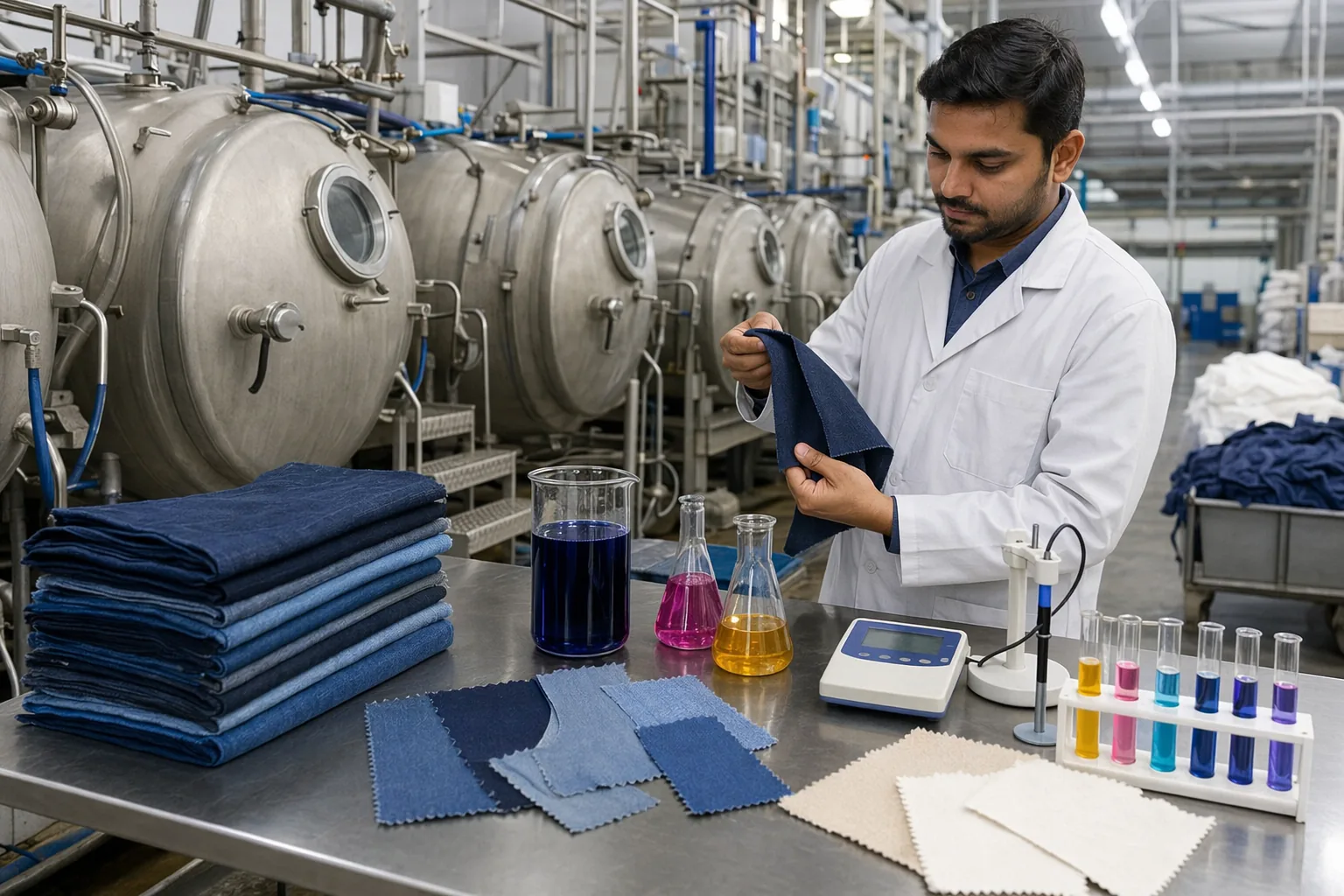
Source application-matched textile enzymes for desizing, biopolishing, denim abrasion, peroxide removal, bioscouring and fabric finishing, supported by technical documentation and pilot validation.
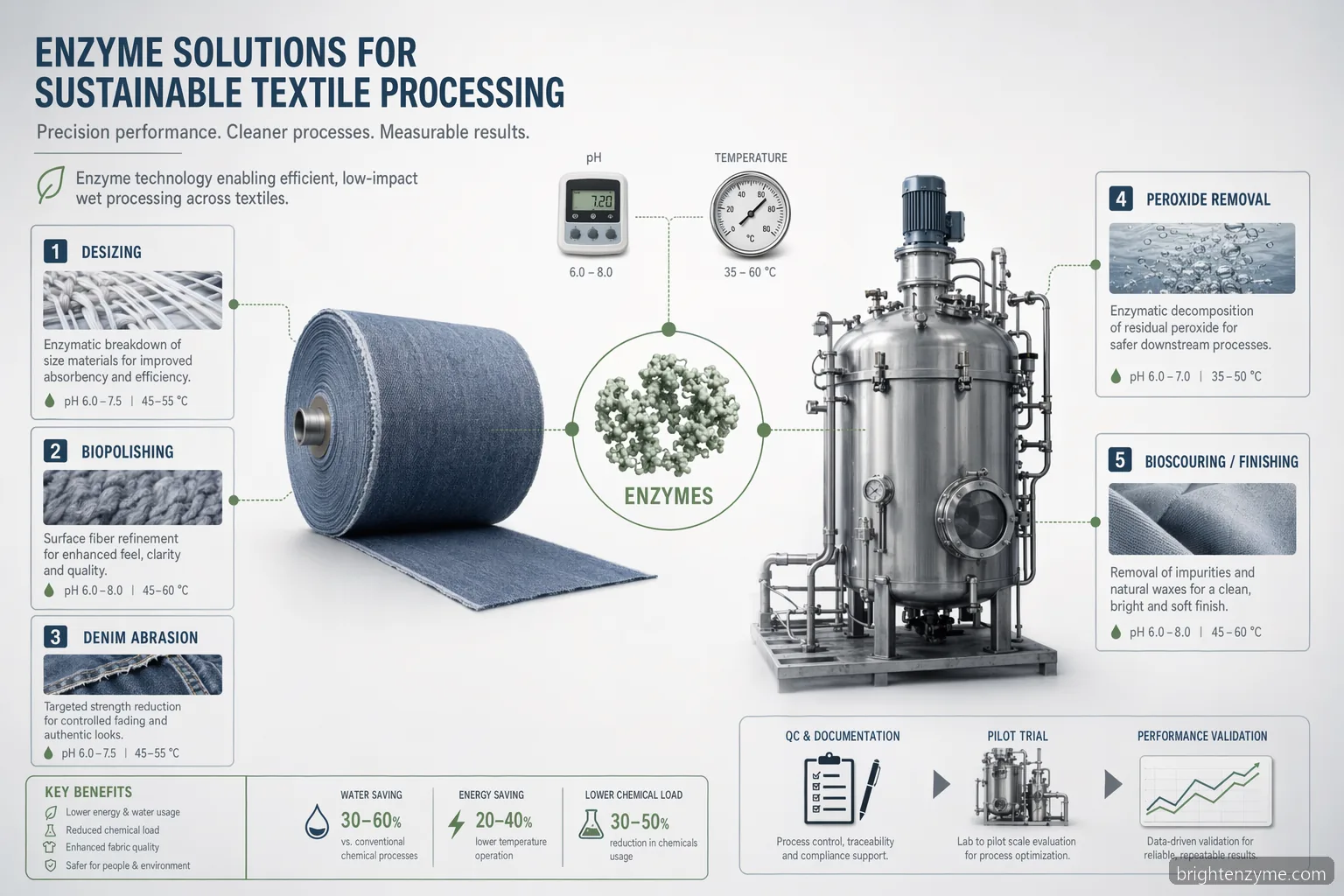
Why Enzymes Matter in Textile Processing
Enzymes in the textile industry are used to make wet processing more selective, controllable and resource efficient. Instead of relying only on strong alkali, oxidants or mechanical action, textile processing with enzymes targets specific materials such as starch size, surface fibrils, residual peroxide, pectin or indigo-related color effects. For mills, garment laundries and fabric finishers, this can improve process consistency, fabric handle, shade uniformity and rework control when the enzyme is correctly matched to the substrate and recipe. Brightenzyme.com focuses on B2B application support for buyers comparing textile enzymes India supply options. Typical industrial enzyme families include amylase for desizing, cellulase for biopolishing and denim abrasion, catalase for peroxide neutralization, pectinase for bioscouring and laccase textile applications where oxidative effects are required. Results depend on controlled pH, temperature, time, mechanical action and verified deactivation before downstream processing.
Applicable to cotton, denim, blends and selected regenerated cellulosics • Useful in continuous, semi-continuous and batch wet-processing routes • Performance should be validated on actual fabric and water conditions
Selecting the Right Textile Enzyme for Each Stage
A textile enzymes manufacturer should recommend products by application, not by enzyme name alone. For woven fabric desizing, bacterial alpha-amylase is commonly used to hydrolyze starch size before scouring or dyeing. For knitwear and cotton fabric finishing, acid or neutral cellulase can remove protruding fibers to reduce pilling and improve softness. In denim, cellulase supports controlled abrasion and contrast development, while laccase textile systems may be evaluated for selected wash-down or shade modification effects. Catalase is used after peroxide bleaching to remove residual hydrogen peroxide before dyeing, reducing the need for repeated hot rinses. Pectinase can assist bioscouring by degrading pectic substances in cotton preparation. The best textile enzyme manufacturer India partner should help define the objective, fabric risk, operating window and stop conditions before commercial adoption.
Amylase: starch desizing • Cellulase: biopolishing and denim abrasion • Catalase: peroxide removal • Pectinase: bioscouring support • Laccase: selected oxidative textile effects
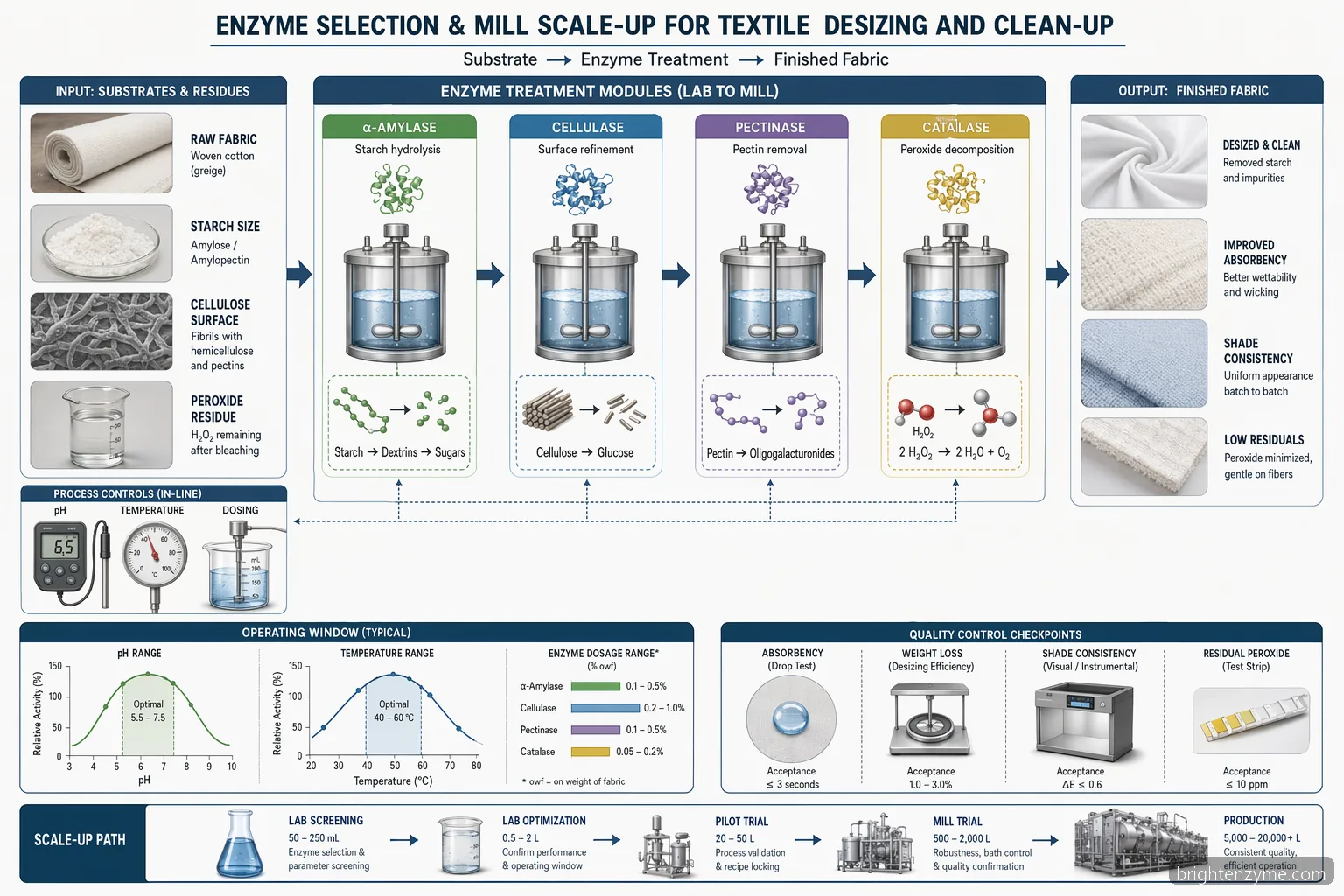
Practical Process Conditions and Dosage Ranges
Process conditions must be optimized by trial because enzyme activity changes with fabric construction, water hardness, liquor ratio, machine motion and chemical residues. As a starting point, amylase desizing often operates around pH 5.5 to 7.0 at 55 to 75°C for 20 to 60 minutes. Cellulase biopolishing is commonly evaluated around pH 4.5 to 6.0 for acid cellulase or pH 6.0 to 7.5 for neutral cellulase, typically at 45 to 60°C. Catalase peroxide removal often works near pH 6.0 to 8.0 at 30 to 55°C. Indicative dosage bands may range from 0.2 to 2.0% on weight of fabric for garment washing or 0.1 to 1.0 g/L in wet processing, depending on product activity. Always confirm with the TDS and run lab beakers before bulk production.
Control pH before dosing enzymes • Avoid incompatible oxidants, biocides or high alkali unless specified • Define deactivation by heat, pH shift or rinsing as per the TDS
QC Checks for Repeatable Mill Performance
Reliable enzyme textile processing requires measurable QC checks before and after treatment. For desizing, iodine testing can confirm residual starch removal, while absorbency drop tests help indicate preparation quality before dyeing. For biopolishing, mills should assess pilling rating, weight loss, tensile strength, hand feel and shade change. Denim laundries often track abrasion level, back staining, tear strength, shade cast and lot-to-lot consistency. For catalase, residual peroxide strips or titration should be used before reactive dyeing to avoid shade variation. Incoming raw material control should include checking the COA against agreed parameters such as activity, appearance, batch number, manufacture date and storage guidance. Buyers comparing textile enzymes manufacturers in India should request consistent sample labeling, retention samples and documented handling recommendations to reduce production surprises.
Verify residual starch, peroxide or pilling according to application • Compare treated and untreated controls in every trial • Record pH, temperature, time, liquor ratio and machine loading
Supplier Qualification for Industrial Buyers
Choosing among textile enzymes manufacturers requires a structured technical and commercial review. Request the current Technical Data Sheet for application window, dosage guidance, storage and deactivation. Ask for the Safety Data Sheet to support plant handling, PPE selection and chemical inventory control. Each commercial batch should be supported by a Certificate of Analysis with traceable batch details and relevant quality parameters. A qualified supplier should provide lab samples, pilot-lot support and troubleshooting when pH drift, foam, shade variation, strength loss or poor abrasion occurs. Commercial evaluation should include lead time, packaging, shelf-life guidance, transport conditions and responsiveness during scale-up. Avoid decisions based only on unit price; enzyme concentration, stability, dosage and rework risk can change the true cost-in-use substantially.
Request COA, TDS and SDS before approval • Run lab, pilot and first-bulk validation • Evaluate service quality as well as product price
Cost-in-Use and Scale-Up Considerations
The textile enzymes market includes products with different activity levels, stabilizers, dilution strengths and recommended dosages, so direct price comparison can be misleading. Cost-in-use should be calculated per kilogram of fabric, per garment or per batch, including enzyme dosage, cycle time, water consumption, steam use, rinsing demand, neutralization chemicals, shade correction and rejected lots. During scale-up, maintain the same fabric-to-liquor ratio, machine action, dosing sequence and temperature ramp used in pilot trials wherever possible. Enzyme should be added only when pH and temperature are within the validated operating window. If the process changes from sample washer to bulk drum, or from lab padder to continuous range, reconfirm performance. A practical textile enzymes manufacturer will help translate lab success into reproducible production economics.
Calculate cost by treated output, not purchase price alone • Include utility, rework and quality impact • Revalidate when fabric, machine or chemistry changes
Technical Buying Checklist
Buyer Questions
Shortlist suppliers that understand your fabric, process stage and machine conditions, not only the enzyme name. Ask for COA, TDS and SDS, then run controlled lab and pilot trials on your actual fabric. Compare shade, handle, strength, pilling, cycle time and cost-in-use. A suitable textile enzymes manufacturer in India should provide consistent batches and practical application support during scale-up.
Common textile enzymes include amylase for starch desizing, cellulase for biopolishing and denim abrasion, catalase for peroxide removal, pectinase for bioscouring and laccase for selected oxidative finishing effects. Each enzyme has a preferred pH, temperature and dosage range. Performance depends on substrate, fabric construction, water quality, machine action and compatibility with other chemicals in the bath.
Biopolishing dosage depends on enzyme activity, fabric weight, liquor ratio, machine agitation and the required pilling improvement. Many trials begin around 0.2 to 2.0% on weight of fabric or an equivalent g/L dosage recommended in the TDS. Monitor weight loss, tensile strength, shade change and hand feel. Confirm deactivation before dyeing or softener application to avoid over-processing.
Two enzyme products with different prices may have very different effective dosages, stability and process benefits. Cost-in-use includes dosage per batch, treatment time, water and steam demand, rinsing, rework, fabric damage risk and quality consistency. Industrial buyers should calculate cost per kilogram of fabric or per garment after pilot validation, rather than comparing only price per kilogram of enzyme.
A supplier should provide a Technical Data Sheet with application guidance, a Safety Data Sheet for handling and storage, and a Certificate of Analysis for each batch supplied. These documents help the mill confirm operating conditions, safe use, batch traceability and quality parameters. For new processes, request lab samples, pilot support and written recommendations for pH, temperature, dosage and deactivation.
Textile Processing Enzymes for Research & Industry
Need Textile Processing Enzymes for your lab or production process?
ISO 9001 certified · Food-grade & research-grade · Ships to 80+ countries
Frequently Asked Questions
How do I choose a textile enzymes manufacturer in India?
Shortlist suppliers that understand your fabric, process stage and machine conditions, not only the enzyme name. Ask for COA, TDS and SDS, then run controlled lab and pilot trials on your actual fabric. Compare shade, handle, strength, pilling, cycle time and cost-in-use. A suitable textile enzymes manufacturer in India should provide consistent batches and practical application support during scale-up.
What are common enzymes used in textile processing?
Common textile enzymes include amylase for starch desizing, cellulase for biopolishing and denim abrasion, catalase for peroxide removal, pectinase for bioscouring and laccase for selected oxidative finishing effects. Each enzyme has a preferred pH, temperature and dosage range. Performance depends on substrate, fabric construction, water quality, machine action and compatibility with other chemicals in the bath.
What dosage should be used for biopolishing enzyme?
Biopolishing dosage depends on enzyme activity, fabric weight, liquor ratio, machine agitation and the required pilling improvement. Many trials begin around 0.2 to 2.0% on weight of fabric or an equivalent g/L dosage recommended in the TDS. Monitor weight loss, tensile strength, shade change and hand feel. Confirm deactivation before dyeing or softener application to avoid over-processing.
Why is cost-in-use important when buying textile enzymes?
Two enzyme products with different prices may have very different effective dosages, stability and process benefits. Cost-in-use includes dosage per batch, treatment time, water and steam demand, rinsing, rework, fabric damage risk and quality consistency. Industrial buyers should calculate cost per kilogram of fabric or per garment after pilot validation, rather than comparing only price per kilogram of enzyme.
What documents should a textile enzyme supplier provide?
A supplier should provide a Technical Data Sheet with application guidance, a Safety Data Sheet for handling and storage, and a Certificate of Analysis for each batch supplied. These documents help the mill confirm operating conditions, safe use, batch traceability and quality parameters. For new processes, request lab samples, pilot support and written recommendations for pH, temperature, dosage and deactivation.
Related: Textile Processing Enzymes for Faster, Cleaner Finishing
Turn This Guide Into a Supplier Brief Request textile enzyme samples, COA/TDS/SDS and pilot-trial support for your mill or garment washing process. See our application page for Textile Processing Enzymes for Faster, Cleaner Finishing at /applications/textile-enzymes-manufacturers-india/ for specs, MOQ, and a free 50 g sample.
Contact Us to Contribute